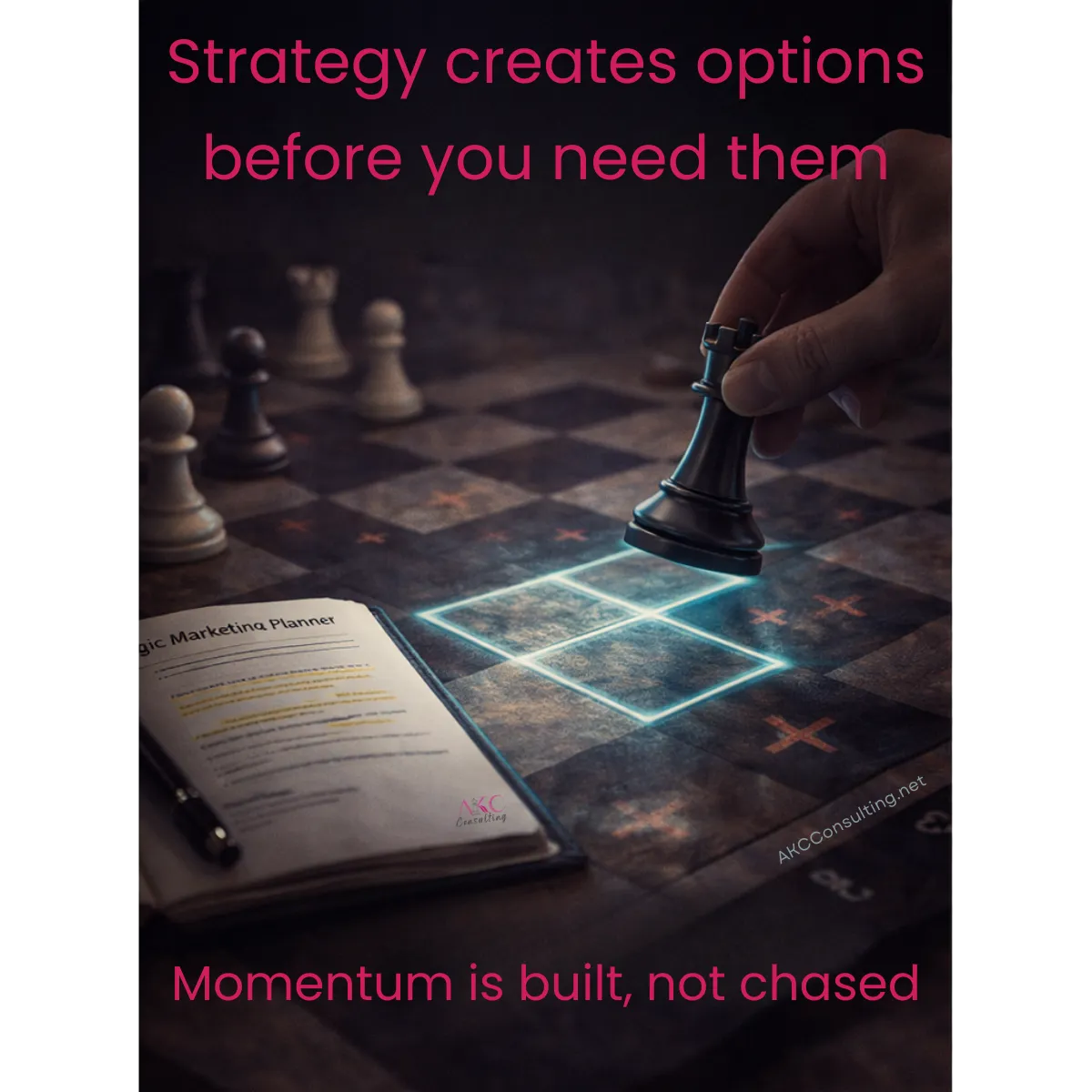
From Reaction to Control: The Shift That Turns Marketing Into Momentum
Once you recognize that reactive marketing is costing you, the next question becomes simple:
What does proactive marketing actually look like in practice?
Not in theory.
Not in a slide deck.
But in the day-to-day decisions that determine whether your marketing compounds - or constantly resets.
In chess, stopping defensive play isn’t enough.
You have to develop pieces, claim space, and create pressure - or the advantage never materializes.
The same is true in marketing.
♟️ What Proactive Marketing Actually Means
Proactive marketing is not about predicting trends or trying to stay ahead of everything.
It’s about deciding the game you’re playing before the pressure shows up.
In chess, proactive players:
develop pieces early
control key squares
create options instead of reacting to threats
Translated to marketing, that means:
deciding your core message before content goes out
aligning campaigns around a primary objective
knowing which channels matter and which don’t
building systems that guide decisions when time is limited
Proactive marketing removes the question, “What should we do next?”
Because the strategy has already answered it.
♟️ The Shift From Tactics to Positioning
One of the most common traps businesses fall into is confusing activity with progress.
Tactics are individual moves.
Positioning is the advantage those moves create over time.
For example:
Posting content is a tactic.
A content system tied to a core offer is positioning.
Running a campaign is a tactic.
A campaign sequence that reinforces brand clarity is positioning.
Reactive marketing lives in tactics.
Proactive marketing is built on positioning.
When positioning is clear:
individual tactics stop competing with each other
decisions become faster
execution feels intentional instead of frantic
This is where compounding begins - not from doing more, but from doing aligned work repeatedly.
♟️ Why Proactive Strategies Compound Over Time
Reactive marketing constantly resets the board.
Each campaign stands alone.
Each post is isolated.
Each effort starts from scratch.
Proactive marketing builds forward.
Clarity creates consistency.
Consistency builds trust.
Trust compounds results.
Instead of asking:
“Did this one thing work?”
You start asking:
“How is this move strengthening our overall position?”
That shift is what turns effort into momentum.
♟️ Knowing the Plan Isn’t Playing the Game
A proactive strategy only works if it’s usable.
Many marketing plans fail not because they’re wrong - but because they’re impractical.
If a strategy:
can’t be referenced weekly
doesn’t guide real decisions
ignores capacity and constraints
…it won’t be followed.
Execution - guided by clarity - is what turns strategy into control.
That’s the difference between knowing the plan and playing it.
♟️ Build Control Before You Need It
The worst time to build strategy is when everything already feels urgent.
Strong brands build systems:
before launches pile up
before performance dips
before teams feel stretched
That’s when strategy can be designed intentionally instead of defensively.
This is why we created the Strategic Marketing Planner - to help businesses move from reaction to control by building a strategy that’s designed to be used, not admired.
♟️ Your Next Move
Stopping reactive marketing is only the first step.
Control comes from structure.
A proactive strategy doesn’t make marketing louder.
It makes it calmer, clearer, and more effective over time.
♟️Download the Strategic Marketing Planner and start building a marketing strategy that compounds - before you’re forced to react again.
At AKC Consulting, we help businesses stop playing defense by building proactive marketing strategies that connect campaigns, clarify priorities, and create measurable momentum.
