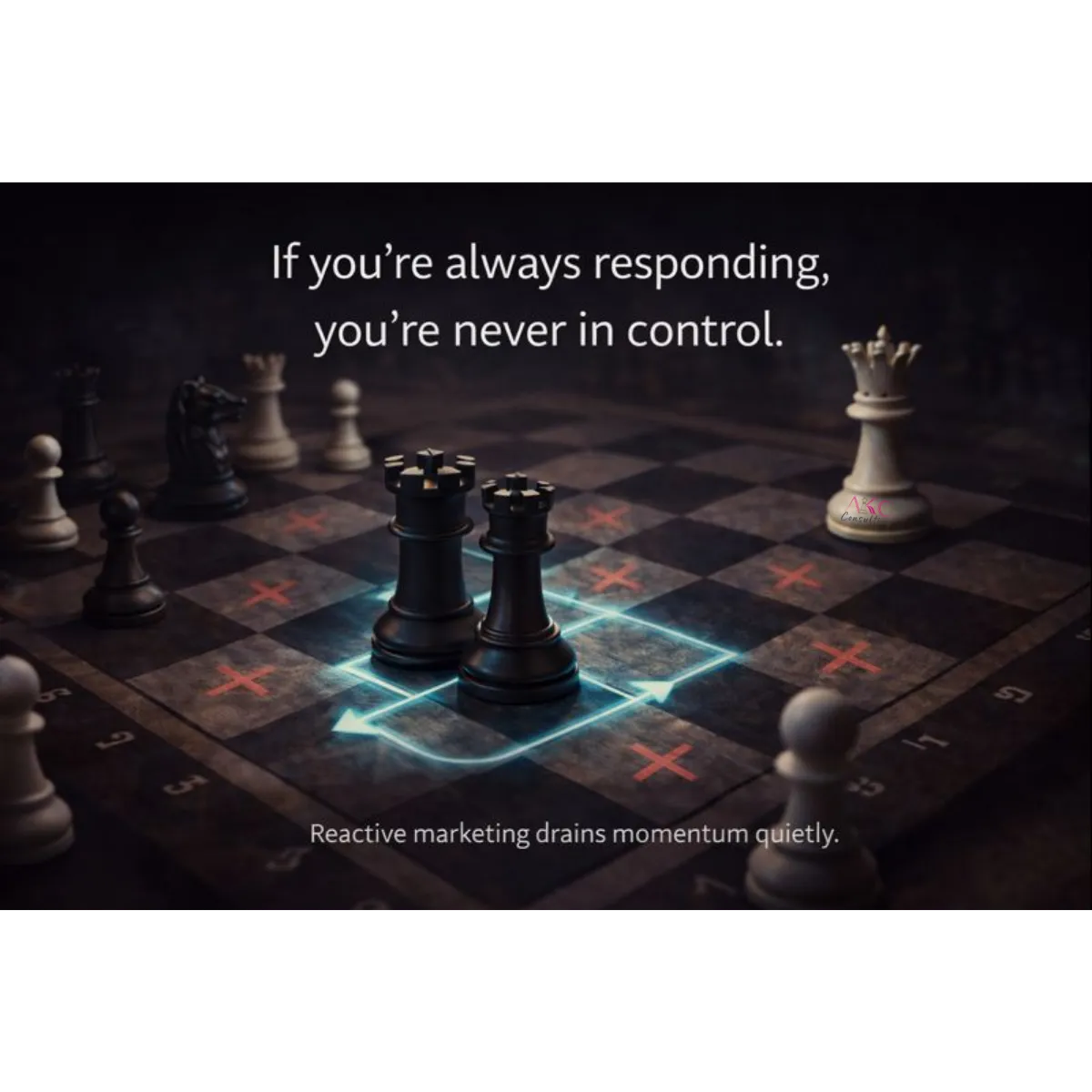
Stop Playing Defense: Why Reactive Marketing Never Pays Off
Playing defense feels safe. It feels responsible. Cautious. Like you’re avoiding mistakes.
But in chess - and in business - defense without a plan doesn’t protect you. It slowly puts you in a weaker position.
That’s exactly what reactive marketing does.
It doesn’t collapse overnight. It quietly drains time, money, and momentum - until you realize you’re always responding and never leading.
♟️ Reactive Marketing Is Playing Not to Lose
Reactive marketing shows up in subtle ways:
Posting because “we haven’t posted in a while”
Launching campaigns because competitors are doing it
Chasing trends instead of building positioning
Making decisions based on urgency instead of strategy
In chess, this is called playing not to lose.
You’re responding to threats instead of creating them. You’re protecting pieces instead of improving position. And over time, the board works against you.
♟️ Why Playing Defense Costs More Than You Think
Reactive marketing doesn’t fail loudly. It fails quietly.
Here’s how the cost shows up:
Ø Inconsistent Results
When every campaign is a reaction, nothing builds on the last move.
Wins feel random. Losses feel confusing.
Ø Disconnected Campaigns
Without a clear strategy, emails, content, ads, and offers stop reinforcing each other.
You’re moving pieces - randomly - not toward the same objective.
Ø Burned-Out Teams
Urgency becomes the default. Everything feels last-minute.
Execution feels chaotic instead of confident.
Ø No Visibility Into What’s Working
When strategy changes constantly, performance becomes impossible to measure. You don’t know what to double down on - because nothing stays in play long enough to evaluate.
In chess terms:
You’re defending every square and controlling none.
♟️ Posting Without Purpose Is Defensive Play
One of the most common forms of reactive marketing is content without intention.
> Posting “just to stay visible”
>Emailing “just to keep engagement up”
>Running ads “just to test something”
These aren’t strategies. They’re survival moves.
Strong brands don’t ask, “What should we post today?” They ask, “Does this move advance our position?”
That’s the difference between reacting to the board and shaping it.
♟️ Proactive Strategy Is About Positioning - Not Pressure
Proactive marketing isn’t about doing more. It’s about knowing where you’re going.
In chess, proactive players:
develop pieces with intention
control key squares
create options before they’re needed
Marketing works the same way.
A proactive strategy:
aligns every channel to the same objective
creates consistency across campaigns
removes panic from decision-making
gives your team clarity about what matters - and what doesn’t
It replaces urgency with confidence.
♟️ Play to Win, Not Just to Survive
The brands that win don’t wait for the board to force their hand. They decide the direction of the game early.
They don’t chase trends. Scramble for attention. Or defend endlessly.
They build structure. Create positioning. They play offense - intentionally.
Because in both chess and marketing,
Control belongs to the player who sets the tempo.
♟️ Your Next Move
If your marketing feels scattered, reactive, or exhausting, it’s not a motivation problem. It’s a strategy problem.
At AKC Consulting, we help businesses stop playing defense by building proactive marketing strategies that connect campaigns, clarify priorities, and create measurable momentum.
If you’re ready to move from reacting to leading:
📖 Download the Strategic Marketing Planner and start building a strategy that lets you play to win!
